


Foot & ankle conditions
Ankle osteoarthritis
Non-surgical, image-guided options for an arthritic ankle, focused on keeping the joint moving.
Understanding the condition
Arthritis in a joint that carries all of your weight
Ankle osteoarthritis often follows an old injury — a bad sprain, a fracture, years of instability — rather than simple ageing. As the cartilage surface thins, the joint becomes tender, stiff and swollen, and bearing weight through it becomes the problem rather than moving it.
Because the ankle is small and heavily loaded, people compensate early: they shorten their stride, roll the foot differently, and pass the load on to the midfoot, knee and hip. Treating the ankle is partly about the ankle and partly about stopping that chain reaction.

Symptoms
What patients describe
- Aching or sharp pain in the front or sides of the ankle when you walk
- Stiffness after sitting, and a limp for the first few steps
- Swelling around the joint at the end of the day
- Difficulty on stairs, slopes and uneven ground
- Clicking, catching or a sense that the joint is grinding
- Avoiding long walks or standing because of what follows
If this sounds like your situation, a consultation starts with finding out exactly which structure is causing the pain.
Treatment
Ankle arthritis treatment at RegenOrthoSport
Primary treatment
Image-guided stem cell therapy (BMAC)
Bone marrow concentrate is placed inside the ankle joint under image guidance, with the aim of reducing pain and supporting the remaining cartilage.
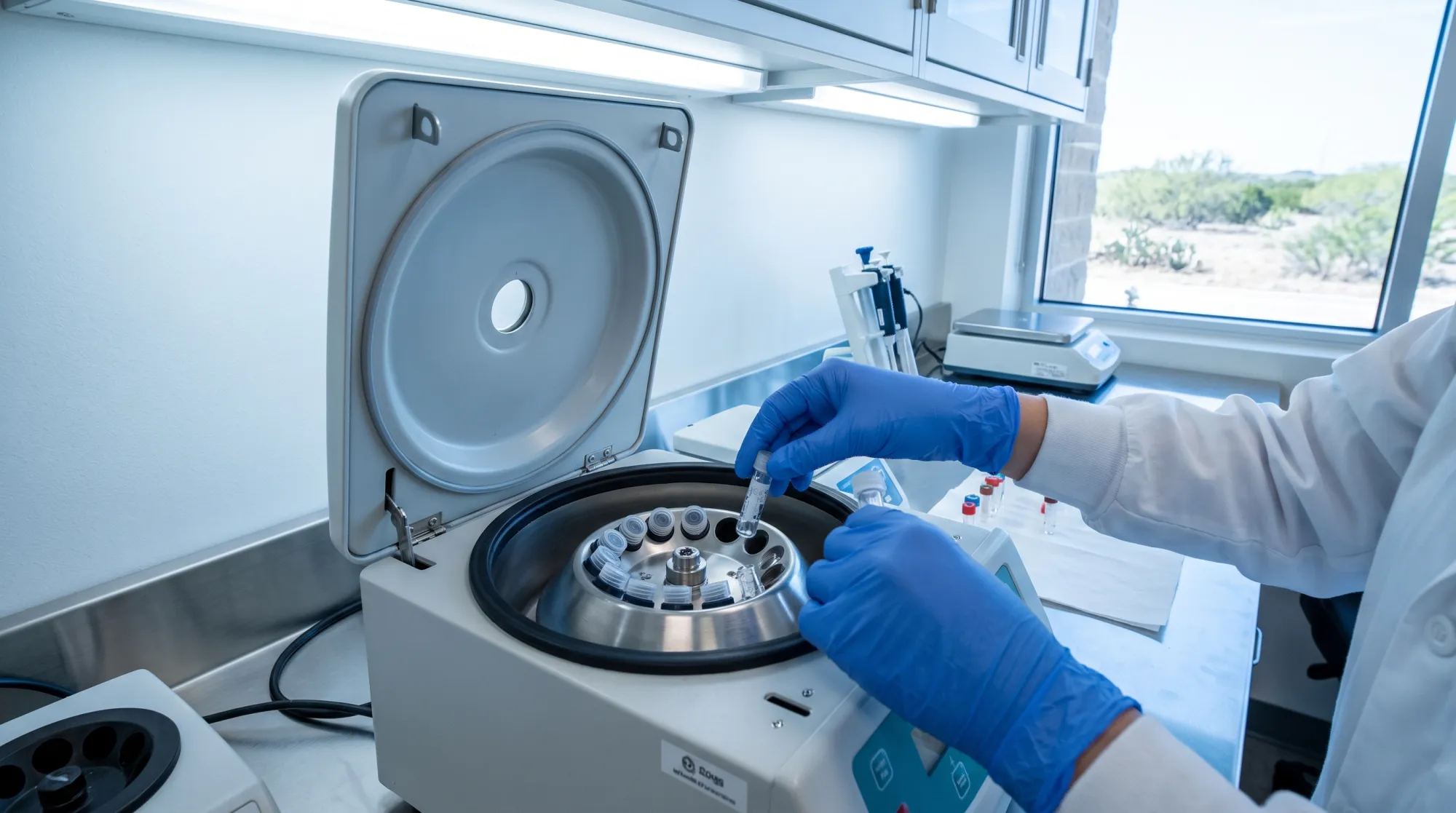
Bone marrow is collected from the back of your hip, concentrated in a centrifuge, and placed by Dr. Movva under ultrasound or X-ray guidance so the treatment reaches the structure that is actually injured.

Before surgery or steroids
Why look at regenerative options first?
The surgical options for an arthritic ankle are ankle fusion, which trades motion for pain relief, and ankle replacement, which is a technically demanding operation in a small joint. Both are significant, and both are difficult to undo.
That is a strong argument for exhausting joint-preserving options first. Regenerative injections, guided rehabilitation, bracing and load management are lower-risk steps, and none of them closes the door on surgery later if the joint continues to deteriorate.
Your plan
What treatment can include
- Image-guided bone marrow concentrate into the ankle joint
- A strengthening plan for the calf, peroneal and foot muscles
- Bracing or orthotics to change how load passes through the joint
- Activity and footwear changes that reduce impact
- Follow-up to track range of motion and function over time
Every plan begins with a detailed assessment. Dr. Movva will tell you if regenerative treatment is not the right option for your case.
Recovery timeline
What to expect after treatment
All patients go home the same day. Mild soreness at the bone marrow collection site and injection areas is common for several days, as the healing process begins with a natural inflammatory response.
-
First few days
Mild soreness or stiffness is typical.
-
Weeks 2–6
Gradual improvement in pain, mobility, and daily function.
-
Months 2–6
Continued healing as stem cells and growth factors support tissue repair.
-
Your rehab plan
Dr. Movva provides a personalized rehabilitation plan to help you achieve the best possible results.
Related
More foot & ankle conditions
Can regenerative treatments help me avoid surgery?
Many patients seek regenerative orthopedic care because they want to delay or avoid surgery whenever appropriate. While surgery may still be necessary in some cases, our goal is to explore advanced non-surgical options that may help relieve pain, improve function, and support natural healing before considering surgical intervention.
Can regenerative treatments help if I've already been told I need surgery?
Some patients who have been advised to undergo surgery may still benefit from a regenerative orthopedic evaluation. Depending on the condition and its severity, advanced non-surgical treatments may be an option to help improve function or potentially delay surgery. However, surgery remains the best treatment for some conditions, and recommendations are made on an individual basis.
How long before I notice improvement?
Healing is a gradual biological process. Some patients begin noticing improvement within several weeks, while others continue to experience progress over several months as damaged tissues respond to regenerative treatment.
How many treatments will I need?
The number of treatments depends on your diagnosis, severity of injury, treatment goals, and healing response. Some patients achieve their desired outcome after a single procedure, while others may benefit from a staged treatment plan.
Consultation request
Get your ankle evaluated
Tell us where it hurts and how it is holding you back. Our team will contact you to schedule a consultation with Dr. Movva at our Dallas office.
- Consultation with Dr. Movva
- Review of your history and imaging
- An honest answer on candidacy
Prefer to talk? Call (817) 442-9292 or text (817) 441-0457.
Contact us or request an appointment
Fields marked * are required.