


Spine conditions
Sacroiliac (SI) joint pain
Image-guided regenerative treatment for the joint between the spine and the pelvis — a frequently missed source of low back and buttock pain.
Understanding the condition
Where the spine meets the pelvis
The sacroiliac joints connect the base of the spine to the pelvis. They barely move, but they transfer the entire load of the upper body into the legs, and they are held together by some of the strongest ligaments in the body.
When those ligaments are injured or become lax — after a fall, a pregnancy, a spinal fusion, or years of asymmetric loading — the joint can become a persistent source of pain that is often mistaken for a disc problem or for hip arthritis.

Symptoms
What patients describe
- Pain low down on one side of the back, often just below the belt line
- Pain in the buttock that can run into the back of the thigh
- Worse getting out of a car, rolling over in bed, or standing from sitting
- Discomfort standing on one leg or going up stairs
- A feeling that the pelvis is "off" or unstable
- Pain that did not respond to treatment aimed at the discs
If this sounds like your situation, a consultation starts with finding out exactly which structure is causing the pain.
Treatment
SI joint treatment at RegenOrthoSport
Primary treatment
Image-guided stem cell therapy (BMAC)
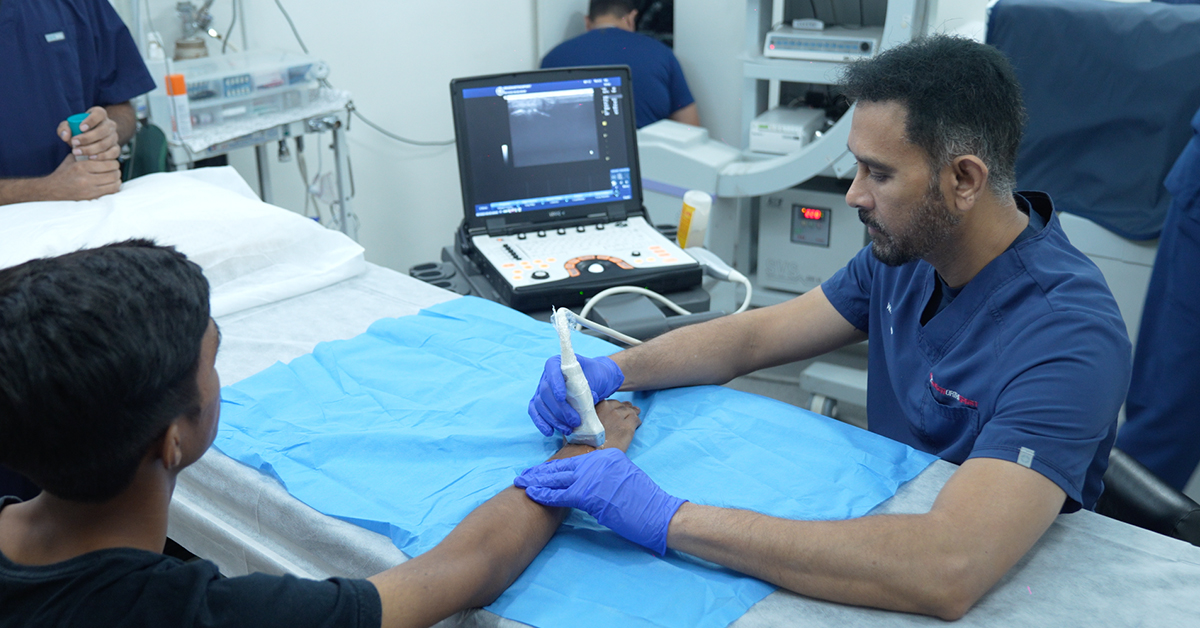
Regenerative injections can be directed both into the SI joint and to the posterior ligaments that stabilize it, under fluoroscopic or ultrasound guidance.
Bone marrow is collected from the back of your hip, concentrated in a centrifuge, and placed by Dr. Movva under ultrasound or X-ray guidance so the treatment reaches the structure that is actually injured.

Before surgery or steroids
Why look at regenerative options first?
The standard pathway for SI joint pain is repeated corticosteroid injections and, if those fail, surgical fusion of the joint. Steroid can be genuinely useful diagnostically and for short-term relief, but it does not address ligament quality, and repeated use in this area is approached cautiously. Fusion removes what little movement the joint has.
Treating the supporting ligaments with regenerative injections is a different aim: to improve the stability of the joint rather than to eliminate its motion. Whether it is appropriate depends on the examination and on how the joint responded to previous injections.
Your plan
What treatment can include
- Fluoroscopy- or ultrasound-guided regenerative injection of the SI joint and its ligaments
- A diagnostic assessment to confirm the SI joint is the pain source
- Gluteal and core strengthening to unload the joint
- A pelvic belt in selected cases
- Review of leg length, gait and hip mechanics
Every plan begins with a detailed assessment. Dr. Movva will tell you if regenerative treatment is not the right option for your case.
Recovery timeline
What to expect after treatment
All patients go home the same day. Mild soreness at the bone marrow collection site and injection areas is common for several days, as the healing process begins with a natural inflammatory response.
-
First few days
Mild soreness or stiffness is typical.
-
Weeks 2–6
Gradual improvement in pain, mobility, and daily function.
-
Months 2–6
Continued healing as stem cells and growth factors support tissue repair.
-
Your rehab plan
Dr. Movva provides a personalized rehabilitation plan to help you achieve the best possible results.
Patient reviews
Patients in their words
I started my journey with Dr. Movva 7 months ago to regenerate L4L5. Still healing, however; extremely pleased with my progress. All of Dr. Movva’s staff are equally as great.
Individual results vary. Patient testimonials describe personal experiences and are not a guarantee of outcome for any other patient.
Related
More spine conditions
Am I a candidate for regenerative orthopedic treatment?
Candidates are typically individuals seeking non-surgical options for joint pain, sports injuries, tendon or ligament damage, or degenerative orthopedic conditions. Your physician will determine whether regenerative treatment is appropriate based on your diagnosis, imaging findings, and overall health.
Can regenerative treatments help me avoid surgery?
Many patients seek regenerative orthopedic care because they want to delay or avoid surgery whenever appropriate. While surgery may still be necessary in some cases, our goal is to explore advanced non-surgical options that may help relieve pain, improve function, and support natural healing before considering surgical intervention.
What is recovery like after treatment?
Recovery is typically much shorter than traditional orthopedic surgery. All patients go home the same day and gradually resume normal daily activities based on their physician's recommendations and individualized rehabilitation plan.
Are there risks or side effects?
Most patients experience only mild soreness, swelling, or stiffness for a few days after treatment. As with any medical procedure, there are potential risks, which your physician will discuss during your consultation along with the expected benefits based on your condition.
Consultation request
Get your back evaluated
Tell us where it hurts and how it is holding you back. Our team will contact you to schedule a consultation with Dr. Movva at our Dallas office.
- Consultation with Dr. Movva
- Review of your history and imaging
- An honest answer on candidacy
Prefer to talk? Call (817) 442-9292 or text (817) 441-0457.
Contact us or request an appointment
Fields marked * are required.